My Neighbor Kept Piling Snow onto Our Driveway—So I Gave Him a Lesson He Won’t Forget
Being a single mom is exhausting on its own. Long shifts, short nights, constant responsibility. Add unnecessary battles you never asked for—and it wears you down in ways you don’t notice until something finally snaps.
My name is Laura. I’m 39, a full-time nurse in the trauma unit at our local hospital, and the kind of tired that doesn’t go away with sleep. My shifts run twelve to fourteen hours, often starting before sunrise and ending long after sunset.
It’s just me and my son, Evan. He’s twelve. His dad has been out of the picture for years. While that used to scare me, we’ve found our rhythm—we’ve become a small, steady team.
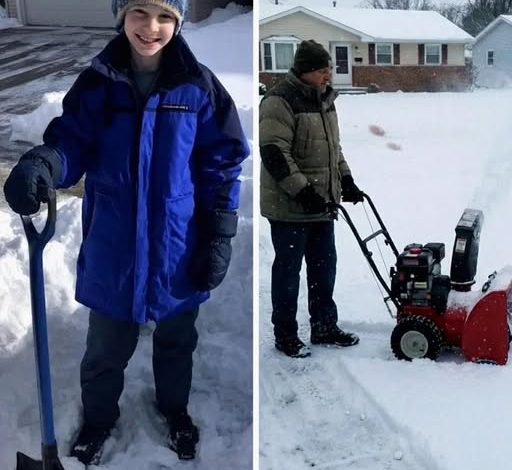
Evan doesn’t complain. If anything, he takes on more than he should. He insists on helping—loading the dishwasher, folding laundry, and in winter, shoveling the driveway after school so I can pull in late at night without climbing over snowbanks in soaked scrubs.
He says it makes him feel useful. I tell him he’s a superhero.
That winter was brutal. Heavy, wet snow that piled up overnight, twice as heavy by morning. Some weekends, Evan and I bundled up and tackled it together, laughing between shovelfuls, breath fogging the air. I bribed him with hot cocoa. He pretended not to care—but drank it anyway.
Our neighbor across the street, Mark, was the type who smiled only when it suited him. His lawn was always perfect, his driveway spotless. He waved if you waved first, spoke like everything was a transaction. We’d lived near each other for two years and barely spoken.
That winter, Mark bought a snowblower.
The first morning he used it, he looked absurdly proud—ski goggles, heavy gloves, chest puffed out like he was conquering Everest instead of a suburban driveway. I felt a small relief. “Maybe this winter won’t be so bad,” I told Evan.
But it didn’t last. Every time it snowed, Mark cleared his driveway early—and every time, a massive chunk of snow ended up dumped directly across ours.
The first time, I assumed it was accidental. The second, careless. By the third, it was a pattern. And the next day, Evan would shovel it.
He never complained. Not once.
One night, after a brutal shift—three trauma cases back-to-back, one fatal—I pulled into the street and saw Evan under the porch light, pushing snow with tired arms. Something inside me cracked.
He greeted me with a tired smile. Dinner was in the microwave—grilled cheese. He was twelve and doing more for me than the grown man next door ever considered.
The next afternoon, I finally said something.
Mark was outside again, snowblower roaring. I waited until he shut it off.
“Oh, hey, Laura,” he said.
I explained calmly that his snow kept ending up on our driveway, and that my son was shoveling it so I could get in safely.
He laughed. “What’s the big deal? It’s snow. That’s how it comes out sometimes. It’ll melt.”
I tried again. He shrugged. “It’s winter,” then turned the snowblower back on—and sent another wave straight across our driveway.
That was the last conversation we had.
Then one evening, I came home early and saw Evan struggling to clear yet another pile, red-faced and drained. I hugged him and told him to stop.
“But you won’t be able to get in later,” he worried.
“I’ll figure it out. You don’t need to fix something that isn’t your fault.”
That night, I stopped reacting—and started planning.
I checked HOA rules. I documented everything: photos, dates, video footage from our doorbell camera showing Mark blowing snow onto our driveway.
The next snowfall came. Thick. Heavy. Right on schedule.
Evan asked if he should shovel. I told him no.
At eight o’clock, Mark came out and did it again. I filed the complaint.
The next morning, two HOA representatives showed up at Mark’s house. I watched from my kitchen window as his confident posture collapsed. They walked him over to our driveway. The evidence was undeniable. Within minutes, he was fined and ordered to clear our driveway immediately.
And he did—carefully, quietly, every inch. For the first time all winter, our driveway was completely clear.
Evan watched from the window, cocoa in hand. “So… it’s done?”
“It’s done,” I said.
From that day on, Mark never dumped snow on our driveway again. He never apologized—but he didn’t need to. His behavior changed, and that was enough. Evan finally retired from his unpaid second job, and when snow fell after that, we only cleaned up our own mess.
Sometimes standing up for yourself doesn’t require shouting or confrontation. Sometimes it’s about knowing your rights, documenting the truth, and choosing not to absorb someone else’s disrespect.
Quiet doesn’t mean weak. And exhaustion doesn’t mean you have to accept being walked over.