Perfectly Cooked Hard-Boiled Eggs
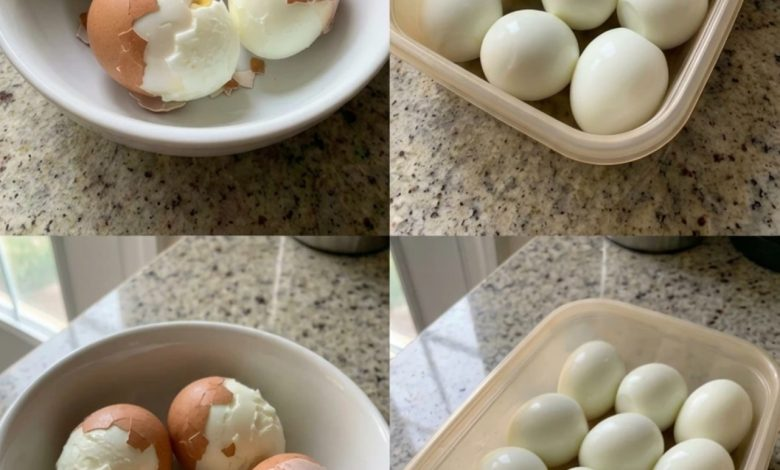
Perfect Hard-Boiled Eggs
Mastering the perfect hard-boiled egg is a true kitchen milestone! Few things are more annoying than struggling with a stubborn shell or discovering that unattractive gray “sulfur” ring around the yolk. This cold-start method is the go-to technique because it gently cooks the egg whites, keeping them soft and tender instead of tough and rubbery.
Ingredients & Tools
| Item | Amount / Description |
|---|---|
| Eggs | As many as needed |
| Water | Enough to cover eggs by ½ inch |
| Ice | For the ice bath |
| Large pot with lid | Big enough for eggs in one layer |
| Slotted spoon | For safe handling |
| Baking soda (optional) | 1 teaspoon |
Step-by-Step Instructions
Step 1: Start Cold
Carefully arrange the eggs in a single layer at the bottom of the pot. Pour in cold water until it sits about ½ inch above the eggs.
Tip: Beginning with cold water lets the eggs warm up slowly. Placing cold eggs into boiling water causes the air inside to expand too quickly, which can crack the shells.
Step 2: Boil and Rest
Place the pot on high heat. Once the water reaches a strong rolling boil, remove it from the heat and cover tightly.
- For Classic Hard-Boiled Eggs: Let sit for 10 minutes
- For Deviled Egg Texture: Let sit for 12 minutes
Step 3: Ice Bath
While the eggs rest, prepare a bowl filled with cold water and plenty of ice. Transfer the eggs using a slotted spoon. Let them cool for 10–15 minutes until completely cold. This rapid cooling helps separate the shell from the egg.
Step 4: Easy Peeling
Tap each egg gently on a hard surface and roll it between your hands to crack the shell. Peel under cool running water. The water slips between the shell and membrane, helping it come off smoothly.
Common Egg Problems & Solutions
| Issue | Cause | Solution |
|---|---|---|
| Gray/Green Ring | Overcooked yolks | Follow the 10–12 minute timing |
| Rubbery Whites | Excessive heat | Remove from heat right after boiling |
| Difficult Peeling | Eggs too fresh | Use eggs aged 7–10 days |
| Cracked Shells | Rough handling | Lower eggs gently, start cold |
Pro Tips for Best Results
The pH Trick:
If your eggs are very fresh, add 1 teaspoon of baking soda to the water. It raises alkalinity and helps the whites release from the shell.
Storage Tip:
Store unpeeled eggs in an airtight container in the refrigerator. They’ll stay fresh for up to 7 days.
The Spin Test:
Not sure if an egg is already cooked? Spin it on the counter. A hard-boiled egg spins smoothly, while a raw egg wobbles due to the liquid inside.