The First Three Colors You Spot Can Reveal the Burdens You Carry!
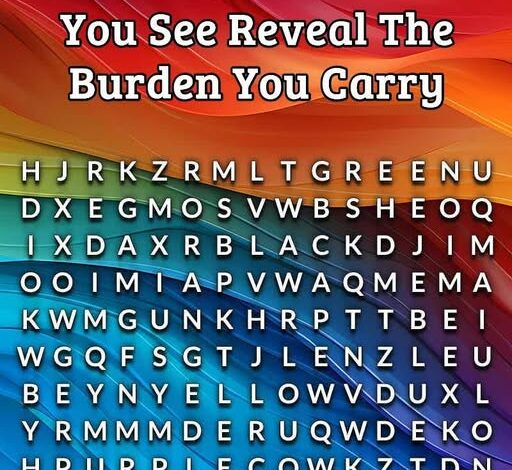
Colors don’t just hit our eyes—they land inside us. Before we can even name what we’re feeling, a shade can trigger a memory, a mood, or a warning. That’s why exercises like “The first three colors you see reveal the burden you carry” have become popular online. It’s not a clinical test, and it won’t replace real mental health work, but it can help you pause and notice what’s happening inside you.
The idea is simple. When you look at a colorful image—or just quickly note the first three colors you see around you—your brain isn’t picking randomly. Your attention goes to what stands out, what feels familiar, safe, or urgent. That instinctive focus can reveal the “burden” you’re carrying.
Here, “burden” doesn’t have to mean trauma or tragedy. It can be quiet stress, long-held anger, or pressure you’ve normalized. This exercise isn’t about diagnosis—it’s about reflection. If you take it seriously, it can highlight patterns you’ve been ignoring.
Color perception is both biological and emotional. Your brain links color to memory, mood, and learned meaning. A white hospital hallway can make you tense; a warm golden light can calm your shoulders. Cultural context also matters: in some Western cultures, white symbolizes purity; in parts of Asia, it’s associated with mourning. Red can be danger or luck, depending on context. Popular interpretations aren’t universal truths—they’re guides.
Over time, humans have attached emotional meaning to color because it helps us make sense of the world. Designers, advertisers, and filmmakers use this instinct every day—and so do we, even when choosing our clothes. Color communicates directly to our nervous system, bypassing logic.
The “first three colors” exercise asks you to notice your instinct—the immediate reaction before your mind rationalizes it. That’s often where insight lives.
Here are common symbolic meanings (as prompts, not rules):
- Red: Passion, intensity, ambition—or anger, conflict, and constant urgency. If red appears first, your burden might be emotional heat or prolonged stress.
- Blue: Calm, loyalty, stability—or sadness, responsibility, and pressure. If blue stands out, your burden may be carrying too much quietly.
- Yellow: Creativity, optimism, hope—or anxiety and the need to stay positive. If yellow comes first, your burden may be performing happiness.
- Black: Power, protection, boundaries—or grief, fear, secrecy. Noticing black may indicate emotional armor or hidden struggles.
- White: Peace, clarity, simplicity—or perfectionism and avoidance. If white appears, your burden may be maintaining control or image.
- Green: Growth, healing, balance—or envy and stress from change. Early green may suggest transition or rebuilding.
- Purple: Wisdom, creativity, intuition—or loneliness, feeling misunderstood. Purple may indicate emotional complexity.
- Orange: Energy, boldness, ambition—or burnout and pressure. Orange may highlight constant output or overexertion.
- Gray: Neutrality, maturity, steadiness—or fatigue, numbness, uncertainty. Gray may point to emotional fog or indecision.
These meanings aren’t verdicts—they’re mirrors. Notice your reaction. Does it sting? Feel familiar? Irritate you? That’s where insight begins.
To make it practical:
- Quickly pick your three colors—don’t overthink.
- Write one honest sentence for each: what it reminds you of, how it makes you feel, what it might represent in your life.
- Optional: journal, discuss in therapy, paint it, or simply observe.
Colors won’t solve your problems—but they can help you notice them. And sometimes, noticing is the first step toward putting the weight down.