Why Dogs Sniff Certain Areas! The Surprising Reason Behind This Natural Behavior!
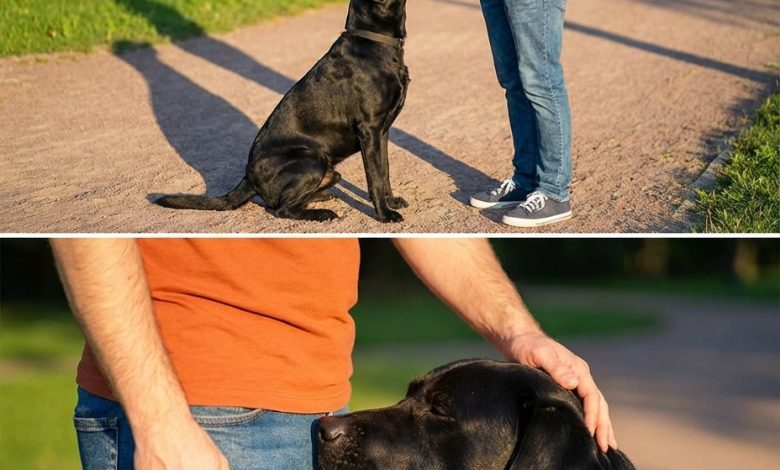
For many dog owners, there’s a familiar moment of awkwardness when a confident pup decides to investigate a guest a little too closely. What humans often see as rude or inappropriate is, for dogs, a sophisticated act of information gathering. To them, this isn’t misbehavior—it’s a rapid download of data. Understanding the biology behind this instinct can turn embarrassment into fascination, revealing how dogs truly experience the world.
Dogs are drawn to areas like the groin or armpits because of apocrine sweat glands. Unlike eccrine glands, which produce watery sweat to cool the body, apocrine glands release pheromones—chemical signals that act like a personal ID card. These scents reveal age, sex, mood, and even health changes. Concentrated in the regions dogs target, they provide a “profile” of the person. Where humans scan faces for social cues, dogs scan chemistry with their noses.
That nose is a marvel. Dogs have up to 300 million olfactory receptors, compared to our six million, and the part of their brain devoted to smell is proportionally 40 times larger than ours. When they sniff, they’re not just detecting odor—they’re reading a timeline of where you’ve been, what you’ve eaten, and how you feel. The Jacobson’s organ, tucked in the roof of the mouth, even lets them “taste” these chemical signals.
In canine society, sniffing is a greeting, the equivalent of a handshake. By collecting this chemical information, dogs reduce uncertainty and feel more secure. A dog allowed to sniff within reasonable boundaries is often calmer, having confirmed that the newcomer poses no threat.
Of course, what feels natural to a dog can feel uncomfortable to humans. The solution isn’t to suppress the instinct—which can cause stress—but to redirect it. Teaching “bridge” behaviors like “sit” or “touch” a hand allows dogs to gather scent from a socially acceptable distance, such as a hand or leg, instead of more intrusive areas.
Handled with patience and positive reinforcement, these moments strengthen the bond between owner and pet. When we stop seeing a dog’s nose as a source of embarrassment and start recognizing it as their most powerful tool, we can guide them with confidence. Balancing instinct with training creates harmony: the dog feels informed, and the humans feel respected.