The Fortune I Didn’t Expect: My Elderly Husband’s Final Act of Revenge Against His Vultures
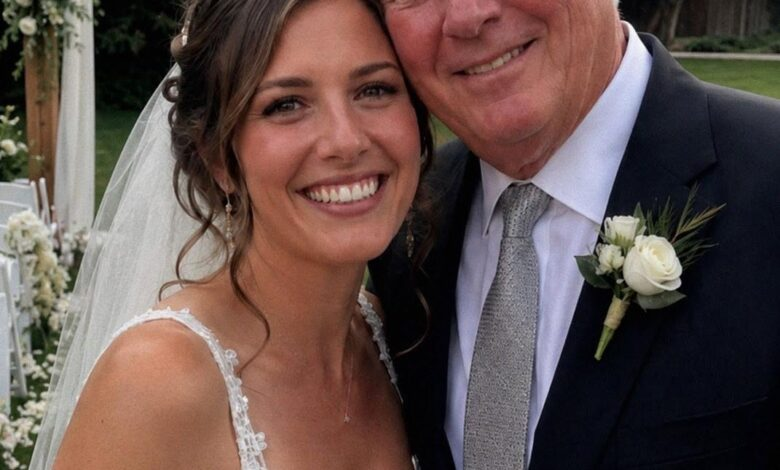
I married him for his money, at least that’s what his venomous children whispered behind my back as they circled like wolves, waiting for his last breath. They saw a young woman preying on an aging millionaire, but they never saw the man who held my hand while I cried over unpaid bills. I was a struggling waitress, drowning in debt, when he offered me a life of luxury. I thought I knew exactly what I was getting into, but the moment the funeral ended and his lawyer opened that small, wooden box, I realized I had been blindsided by the ultimate, cold-blooded final act.
My life before Russell was measured in coins and exhaustion. I lived in a cramped apartment that smelled perpetually of damp rain and instant noodles, working twelve-hour shifts on my feet until every muscle ached. I was thirty-two, perpetually trapped in the cycle of month-to-month survival, holding my breath just to keep my head above water. When I met Russell at a high-end charity dinner, I was nothing more than a tray-carrying server in a uniform that didn’t fit. He was silver-haired, impeccably dressed, and possessed a quiet, observant grace that set him apart from the wealthy socialites who treated me like furniture.
He didn’t look through me; he looked at me. He noticed my pain, found me a place to sit, and engaged me in conversation about everything from his late wife’s garden to the books I read on the bus. It was the beginning of an unlikely tethering. He called me every single morning, his voice a steady, grounding presence. Three months later, over a quiet dinner, he slid a ring across the table. He was honest, almost brutally so: he wasn’t asking for a fairy-tale romance, but for a partnership where he could provide the safety I had never known. I told myself I was being practical, a drowning woman grabbing the nearest hand. I said yes, and the world—especially his children—called me a gold-digger.
His daughter, Marlene, was the leader of the pack. From the moment we met, she treated me with a calculated, frozen hostility. She looked at me as if I were a stain on her father’s pristine life. On our wedding night, as Russell and I stood in the foyer of the sprawling estate he had called home for decades, Marlene watched us from the landing with eyes as cold as glass. “So you’re the new project,” she sneered. I tried to remain civil, but the message was clear: she was just waiting for me to be discarded.
The months that followed were a surreal blur of marble floors and high ceilings, but the true warmth came from Russell himself. He was patient and tender, understanding my lingering trauma from years of poverty. When I instinctively tried to hide money or apologize for my needs, he reminded me that I didn’t need to earn my seat at his table. Somewhere amidst the tea, the late-night talks, and the genuine companionship, the lines blurred. I stayed not because of the luxury, but because I had fallen in love with the man who made me feel human again.
Then, the diagnosis came like a thunderclap: six weeks. The hospital became our entire world. Marlene and her brothers were a wall of black coats and resentment, hovering like vultures at the hospital entrance. They tried to keep me out, to frame me as an interloper, but Russell’s grip on my hand remained the only anchor I had. On his final day, he whispered a singular directive: “Don’t fight them. Just trust me.” I didn’t understand then, but I followed his lead. When he passed, I was left alone in a house that felt too large, faced by a jury of his children who couldn’t wait to evict me.
The day after the funeral, the lawyer summoned us all. The atmosphere in the office was suffocating. Marlene sat with her arms crossed, her smile thin and victorious. “How generous of you to come,” she mocked. “When do you plan on vacating my father’s house?” I folded my hands, refusing to let them see me crumble. The lawyer placed a small, nondescript wooden box on the desk. Inside, there were no deeds or jewelry, only a worn photograph of me at that charity dinner and a sealed letter.
Marlene snorted in derision, calling it “Daddy’s last little joke,” but then the lawyer began to read the will. The room went deathly silent. Russell had been meticulous. He knew his children’s greed, their temperaments, and their past behaviors. The lawyer read clauses that stripped away their control, placing the estate and the controlling interest in his company entirely in my hands. His children would receive trust allowances, but only on strict conditions—and any attempt to contest the will resulted in an immediate, total forfeiture of their share.
Marlene stood so quickly her chair slammed into the wall, her face a mask of rage and disbelief. “She manipulated him! He was sick and she crawled into his life!” she shrieked. But then I read the letter aloud. Russell had known I was pregnant long before I did. He had seen the subtle shifts, the morning sickness, the way I had changed, and he had set everything in motion to ensure that I and our unborn child were insulated from their malice. He had been a step ahead of their greed the entire time.
The room erupted into chaos, but I didn’t move. For the first time, I saw the true extent of his love—it wasn’t just a safety net; it was a fortress. I walked out of that office with the box clutched to my chest, the weight of his legacy finally settling into place. I didn’t win a fortune; I won a future. I returned to that quiet, grand house and opened the windows to let the rain-scented air fill the rooms. I finally understood that the gift wasn’t the marble or the estate—it was the fact that he had seen me, truly seen me, and ensured I would never have to be small or frightened again. I sat by the window, my hand resting on my belly, and finally, I felt at home.