My MIL Treated My Mom s Country House like a Resort I Taught Her No One Was There to Serve Her
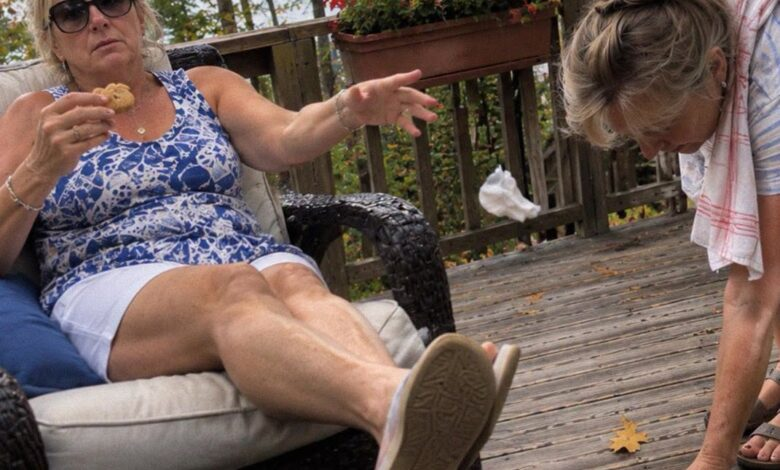
My MIL spent every weekend at my mom’s country house being waited on, but ordering Mom to move her own flowers was the last straw. So, I set my alarm for 5:00 a.m. and decided to change the rules. What would happen when Susan woke up?
The alarm went off at 5:00 a.m., and for once, I didn’t hit snooze.
I slipped out of bed before my husband, Daniel, woke up, pulled on yesterday’s sweatshirt, and crept downstairs.
The house was still dark. Outside, the lake was a sheet of black glass, and the only sound was the refrigerator humming in my mother’s kitchen.
Her kitchen.
That mattered more to me than it had a week earlier.
We got married in the spring, and this was the first summer our families spent together.
My mother has a little place by the lake.
The first time my husband’s parents came up, she was nervous for a week. She bought new sheets and wanted everything to be perfect, because in her head we married into each other now and this is family.
The weather’s held, so we’d been going up most weekends since June.
And every single weekend looked the same.
My mom was up at six.
She’d make breakfast for six people. Cleaned it up. Beds, towels, and a 40-minute round trip to the store because Susan didn’t eat regular mayonnaise.
Then she cooked dinner.
Susan, my mother-in-law, arrived, walked through the house, and got into the lounger on the deck with her iced tea and her phone.
That was it. That was her weekend.
All summer, she had not once asked if she could help.
Not once.
She’d never carried a plate to the sink. Never chopped an onion. She didn’t even take her own coffee cup in.
And at some point she stopped saying thank you. That was the part that actually got me.
But the flower boxes were what finally pushed me over the edge.
The previous Saturday, Mom had put new geraniums along the deck rail. She’d been looking forward to it for weeks. She showed me pictures of them on her phone in the car like she’d planted some prize-winning garden instead of six little boxes of red flowers.
Susan came out with her tea, sat down, looked at them and said, “Oh. No, these are all wrong here. I’m lying right here and they’re blocking my whole view of the water. Don’t do that again.”
Don’t do that again.
In my mother’s house. About my mother’s flowers. From the lounger my mother put a cushion on that morning.
Mom said, “Oh, I didn’t think of that,” and started moving them.
She moved her own flowers. While that woman watched.
I knew my mother. She was soft and she’d swallow anything to keep the peace, especially for me.
That’s exactly why I wasn’t swallowing it.
At that point, shouting wouldn’t have done anything.
Susan would have gone home and told everyone how I’d attacked her. I also didn’t want to spend the next 30 Christmases sitting across from a woman who thought I despised her.
So I hadn’t said a word that night.
Instead, I’d set my alarm.
At 5:07 a.m., I found an old dry-erase board Mom kept beside the pantry.
I put it on the kitchen table.
At the top, I wrote, “WEEKEND JOBS.”
Then I divided the work.
“Daniel: breakfast cleanup.”
His dad, “Richard: grocery run.”
“Me: lunch.”
“Susan: breakfast.”
Dinner rotated.
At the bottom, beside Mom’s name, I wrote, “Enjoy your house.”
I was still looking at it when I heard slippers behind me.
Mom stood in the doorway in her robe.
“What are you doing?”
“Fixing something.”
She came closer and read the board.
Her face changed before she reached the second line.
“No.”
“Mom.”
“No, honey. Take that down.”
“It’s your house.”
“They’re guests.”
“They’ve been guests here almost every weekend for two months.”
She lowered her voice as if Susan might somehow hear us through the ceiling.
“You can’t give people chores when you’ve invited them somewhere.”
I looked at her.
“Why not?”
“Because that’s not how you treat guests.”
“Is telling the person who owns the house where she’s allowed to put her flowers how you treat a host?”
Her mouth tightened.
“She didn’t mean anything by it.”
“You moved them.”
“It wasn’t a big deal.”
“Then put them back.”
Mom looked toward the windows.
I knew that look. She wasn’t thinking about flowers. She was calculating exactly how much discomfort she’d have to endure if she admitted she wanted them there.
“I’m not having you start something with your mother-in-law because of me,” she said.
“I’m not starting anything. I’m ending something.”
She reached for the eraser.
I took the board.
“One day,” I said. “Just try one day where everybody takes care of themselves.”
“I like taking care of people.”
“I know. That’s different from being everybody’s maid.”
Her expression told me I’d gone too far.
Then footsteps sounded overhead.
Mom stared at the board.
“Oh, Lord.”
Susan came downstairs 15 minutes later wearing a linen cover-up and sandals, already dressed for a day on the deck.
She walked straight to the coffee machine.
There was no coffee.
Mom made a tiny movement beside me.
I touched her wrist.
Susan opened a cabinet, then another.
“Is the coffee not on?”
“Not yet,” I said.
She glanced toward Mom.
“Oh.”
Then she noticed the board.
She read it once.
Then again.
Susan laughed.
“What’s this?”
“Weekend jobs,” I said.
“I can see that,” she replied.
“You’re breakfast.”
She looked at me like I’d told her she’d be reroofing the house.
“You’re serious?”
“Very.”
Her smile disappeared.
“Your mother invited us here.”
Before I could answer, Daniel came downstairs.
He looked at the board.
Then he looked at me.
I’d warned him the night before that I was done watching Mom work herself sick. I hadn’t told him exactly what I planned.
Susan turned to him.
“Apparently I’m making breakfast.”
Daniel hesitated.
That half second felt much longer.
Then he said, “Okay.”
Susan stared at him.
“Okay?”
“Yeah. I’ll clean up afterward.”
She folded her arms.
“When people stay at my house, I don’t hand them a chore list.”
Richard had just reached the bottom of the stairs. He stopped.
Daniel looked at his mother.
“No. Dad does the grocery shopping, I usually make breakfast, and everybody clears the table except you.”
Susan’s head snapped toward Richard.
He gave an awkward shrug.
“I do usually shop.”
“That’s not the point.”
It was exactly the point.
Susan considered herself a wonderful hostess. I’d heard her say it. She planned dinners, chose flowers for the table, decided what music should be playing, and told everyone where to sit.
Other people did the work.
I watched that realization begin to move around the room, but Mom immediately tried to save everyone.
“I can just make eggs,” she offered.
“No,” I said firmly.
Susan gave me a hard look.
Then she opened the refrigerator.
“Fine. Where are they?” she asked.
By 9 a.m., breakfast had happened.
Nothing dramatic occurred. Susan didn’t poison anyone. Nobody went hungry.
She made scrambled eggs and toast. The eggs were slightly dry. She asked where the butter was even though she’d watched Mom take it from the same shelf every weekend. She asked where the frying pan was. She couldn’t find the spatula.
Three times, Mom got up.
And three times, I told her to sit down.
After breakfast, Susan left her plate on the table out of habit.
Daniel looked at it.
Then at her.
She returned and picked it up.
I should have felt triumphant.
Instead, I felt tired.
Because Mom looked miserable.
By lunchtime, I realized Susan wasn’t the only person fighting the new system.
Mom followed me around the kitchen.
“You’ve cut those tomatoes too thick.”
“They’ll survive.”
“I could make the dressing.”
“I’ve got it.”
“The good bowl is in the bottom cabinet.”
“Mom.”
She stopped and asked, “What am I supposed to do?”
That question stayed with me.
Not “Can I help?” Not “What do you need?”
What am I supposed to do?
“Go sit outside,” I said.
“Do what?”
“Whatever you want.”
She looked genuinely lost.
Later that afternoon, I went upstairs for a sweater and heard voices through the guest-room door.
It was Susan and Richard.
I wasn’t trying to listen until Susan said, “This is exactly what I was trying to prevent.”
I stopped.
Richard said something too quietly for me to hear.
Susan answered, “She told me herself. She said it’s getting harder. The cleaning, the shopping, all of it. Now everyone’s treating her like she can’t manage her own house.”
I knocked.
The talking stopped.
Susan opened the door.
“What are you talking about?”
“Excuse me?”
“My mother told you it was getting harder?”
Susan looked at Richard, then back at me.
“She didn’t tell you?”
“No.”
Mom was sitting on the deck when I came downstairs.
I asked her directly.
She sighed.
“It wasn’t some big secret.”
“What did you tell Susan?”
“Nothing important.”
Susan had followed me down.
“You told me maintaining this place was wearing you out.”
“I said I get tired more easily than I used to,” Mom said.
“And that the grocery runs were a nuisance,” Susan said. “And that opening the house every weekend was a lot of work.”
I turned to Susan.
“So your solution was to do absolutely nothing?”
Her expression hardened.
“No. My solution was not to make her feel like she couldn’t handle her own life.”
I actually laughed.
“By leaving coffee cups everywhere?”
Susan flushed.
“You don’t understand.”
“Then explain it.”
She was quiet for a moment.
Then she sat down.
“When my mother got older, we started helping her with everything. At least that’s what we called it.”
Her voice changed.
“We took groceries out of her hands. Told her not to cook. Told her to sit down when she tried to clean. Every holiday, she’d start doing something and somebody would say, ‘Mom, don’t worry about that.’ We thought we were being good to her.”
Susan looked toward the water.
“One day she told me we’d made her feel useless.”
Nobody interrupted.
“She said we’d decided she was old before she had. That every time we told her to sit down, what she heard was that nobody needed her anymore.”
I looked at Mom.
She was watching Susan carefully.
Susan continued.
“So when your mother told me this house was getting harder but kept saying how much she loved having everyone here, I thought I understood.”
“You thought making her wait on you was helping her?”
“I thought letting her host the way she wanted was helping her.”
For one uncomfortable second, I could almost see how she’d gotten there.
Almost.
Then I remembered the flowers.
“What does any of that have to do with leaving your coffee cup on the table?”
Susan didn’t answer.
“Or making her drive 40 minutes because you don’t like the mayonnaise she buys?”
Nothing.
“Or telling her where she’s allowed to put her own flowers?”
Her face changed.
Mom looked down.
I kept going.
“Maybe that’s why you let her make breakfast the first weekend. It isn’t why you stopped saying thank you.”
Susan’s mouth opened, then closed.
Richard stared at the deck boards.
Daniel came outside just in time to catch the silence.
Then Mom spoke.
“I do like it.”
I turned toward her.
She folded her hands in her lap.
“I like cooking for everyone. I like having the bedrooms full. I like hearing people down here in the morning.”
Susan looked relieved too quickly.
Mom wasn’t finished.
“But I suppose I got carried away.”
“With what?” I asked.
She looked at me.
“Trying to make them want to come back.”
I didn’t understand at first.
Then I did.
Mom gave a small, embarrassed laugh.
“You got married. Suddenly there’s this whole other family. I wanted things to be easy. I wanted them to like being here. I wanted you not to have to worry that your mother and your husband’s mother couldn’t get along.”
I looked at her.
“The sheets,” I said.
She smiled faintly.
“The sheets,” I said.
Mom smiled faintly. “The sheets.”
“The special groceries,” I added.
“I wanted everybody comfortable,” Mom said.
“And every time we came back…” I let the thought trail off.
Mom looked at me. “I thought I was doing something right.”
The whole summer rearranged itself in my head.
Mom hadn’t simply been serving Susan because she couldn’t say no.
She’d been auditioning.
For a place in my new family.
Susan looked stricken.
“I thought you liked doing all this.”
Mom nodded and said, “I do.”
Susan blinked.
Then Mom said, “I like taking care of people. I don’t like being taken for granted. Those aren’t the same thing.”
Nobody had anything to say after that.
At five, Susan checked the board.
Her name was beside dinner.
For a second, I thought we were about to start all over again.
She stared at it.
Then at Mom.
“What were you planning to make?”
Mom started to stand.
I gave her a look.
She sat back down.
Susan sighed.
“Fine. Where do you keep the potatoes?”
Dinner wasn’t great.
It wasn’t awful either.
Susan overcooked the chicken and forgot salt in the vegetables. She asked about every cabinet in the kitchen.
But halfway through, she stopped asking Mom.
She looked for things herself.
Afterward, Mom automatically reached for the plates.
Susan picked them up first.
“Leave those. I’ll get them.”
Mom smiled.
Then her expression shifted.
“Don’t tell me to sit down either.”
Susan froze.
For the first time all day, I almost laughed.
Susan caught herself.
“Right.”
She held the plates against her chest.
“Do you want to help?”
Mom considered it.
“No.”
“Okay.”
Susan carried the dishes inside.
The next morning, I came downstairs and found her coffee cup already in the sink.
I didn’t mention it.
Mom didn’t either.
Before they left Sunday afternoon, Susan found Mom on the deck.
I stayed close enough to hear without pretending I wasn’t listening.
Susan looked toward the geraniums.
“I’m sorry about those.”
Mom said nothing.
“I shouldn’t have told you to move them. It’s your house.”
“No,” Mom said. “You shouldn’t have.”
Susan accepted that.
No excuses. No speech.
Then she looked at the flowers again.
“They are pretty.”
Mom smiled.
“I know.”
Daniel was loading bags into the car when Susan walked past the kitchen table and noticed the chore board.
I’d already wiped it clean for the next weekend.
She picked up the marker.
For a second, I thought she was going to erase the whole thing.
Instead, she wrote, “Susan – Saturday breakfast.”
She put the marker down.
On her way outside, she paused beside the lounger she’d occupied all summer.
From that chair, the geraniums blocked part of the lake.
Susan looked at the flowers.
Then at the view.
She didn’t ask anyone to move a thing.
She picked another chair.
Mom noticed.
So did I.
I had set my alarm because I thought I needed to teach my mother-in-law that nobody was there to serve her. I did. But that wasn’t the only thing that changed.
Mom stopped treating every visit like an exam she had to pass. Susan started carrying her own plate, asking before she expected something, and doing enough work to understand how much had always been happening around her.
And I learned that defending my mother didn’t mean I had to fight every battle for her.
Sometimes I just had to make enough room for her to finally say no.
The geraniums stayed exactly where she planted them.
So here’s the real question: If you were in my position, would you have confronted Susan directly or let the chore board teach her the lesson?